Case Study
Headless Commerce: ERP and CRM Integration
How integrating Salesforce and SAP systems with modern e-commerce stores yields higher performance and sync.
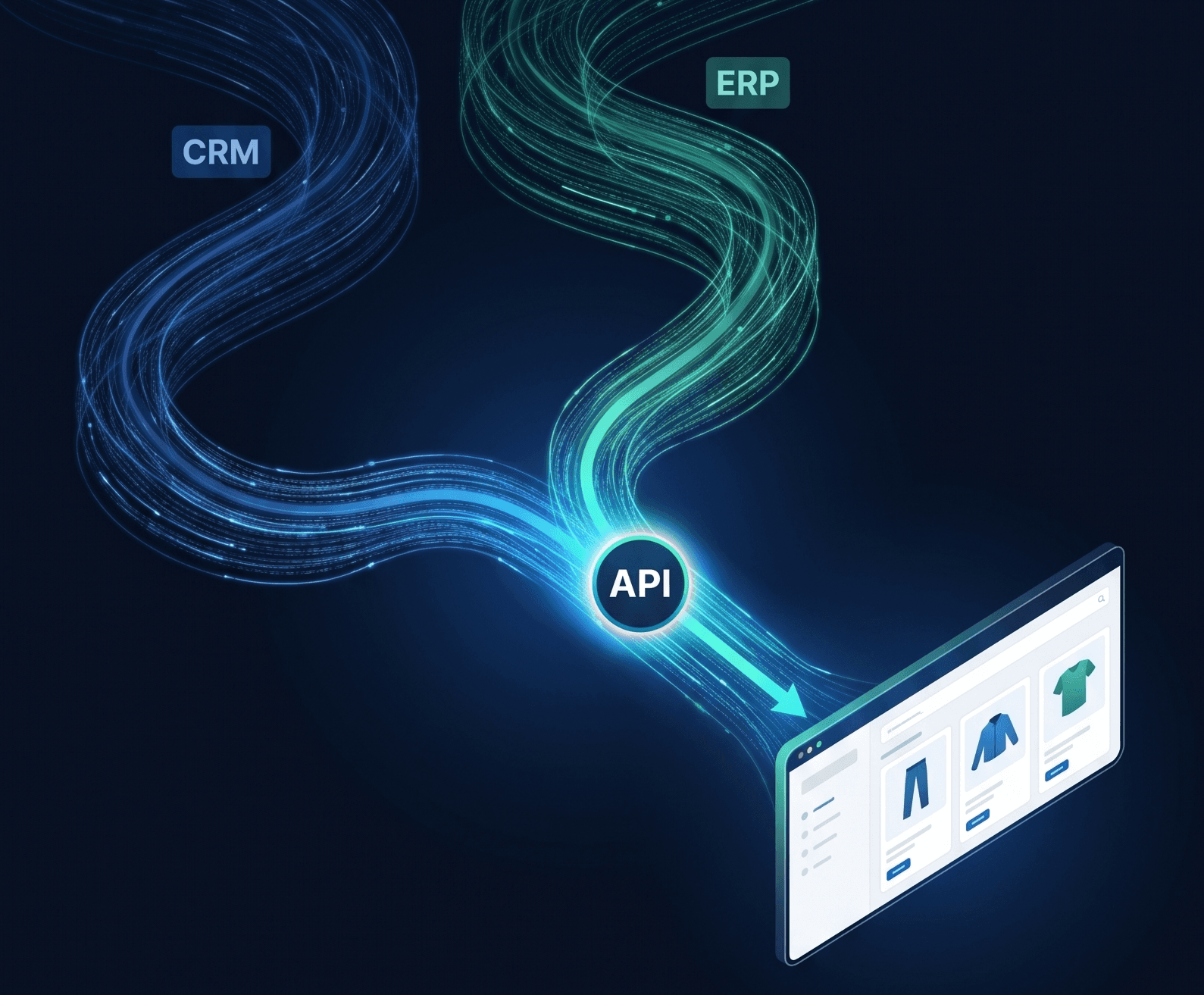
Headless commerce separates the storefront from the systems that hold inventory, pricing, and customer records. That separation is the point — and also where the integration work lives.
Why the storefront should not own the truth
In a coupled platform, the store is the system of record for products, stock, and customers. Once an ERP is in place, that is no longer true — and keeping two systems in agreement through periodic exports is where most commerce integrations break down.
The headless model resolves this by making the storefront a rendering layer over data it does not own. Stock levels come from the ERP, customer history from the CRM, and the storefront's job is presentation and conversion.
Sync patterns that hold up
The naive approach — a scheduled export every fifteen minutes — produces oversells during promotions and stale pricing during changes. Event-driven sync is more work upfront and considerably less work thereafter.
- Publish inventory and price changes as events from the ERP rather than polling for them
- Make consumers idempotent — events will be delivered more than once
- Reserve stock at cart level with a timeout, rather than checking availability at checkout
- Keep a reconciliation job as a safety net, but do not let it become the primary mechanism
Handling the systems being down
An ERP maintenance window should not take the storefront offline. Cache aggressively for read paths — catalogue, pricing, content — so that browsing continues even when upstream systems are unavailable.
Write paths need a different treatment. Queue orders locally and confirm to the customer immediately, then reconcile with the ERP asynchronously. The customer experience should not be coupled to backend availability.
What to measure after launch
Integration quality shows up in operational metrics rather than page speed scores: oversell rate, order-to-ERP latency, reconciliation exceptions per day, and the proportion of orders requiring manual intervention. These are the numbers that tell you whether the integration is actually working.
Working through this in your own organisation?
Tell us where you are stuck and we'll respond with a practical next step — no pitch decks.
Start a conversation